
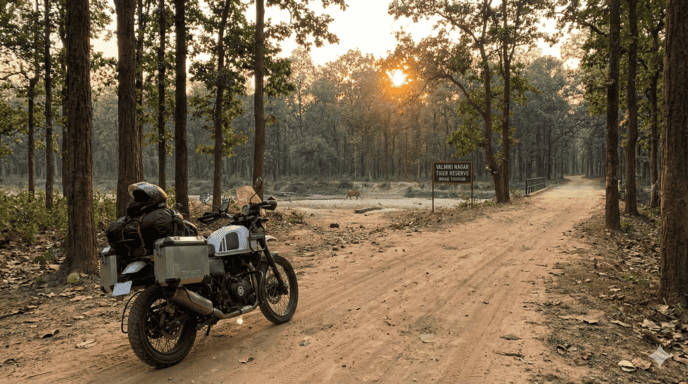
If you are a rider based in Bihar, you know the struggle. We crave winding roads, lush greenery, and that drop in temperature that signals an adventure. But too often, we are stuck on dusty highways dodging e-rickshaws.
Enter Valmiki Nagar Tiger Reserve (VTR).
Tucked away in the northwestern corner of Bihar, hugging the Nepal border and the mighty Gandak River, VTR is Bihar’s only tiger reserve. It’s the closest thing we have to Jim Corbett or Ranthambore, right in our backyard.
For years, the ride to VTR was infamous—a suspension-breaking nightmare through the badlands of Champaran. But things are changing in 2026.
I recently took my motorcycle on the 300-kilometre journey from Patna to the heart of the jungle. This isn’t a sugarcoated travel brochure; this is the raw, honest “Nakli Life” guide to the Valmiki Nagar Tiger Reserve bike trip, covering the good, the bad, and the dusty Bettiah road conditions.
Why Valmiki Nagar Tiger Reserve on a Bike?
Before we get into the grit of the road, why ride there? Why not just take a train to Bagaha?
Because the geography changes dramatically, and you need to feel it. You start in the chaotic plains of the Ganga, cross into the historical lands of Champaran, and suddenly, the horizon shifts. You see the foothills of the Himalayas (the Churia range in Nepal), the air gets cleaner, and the sugarcane fields give way to dense Sal forests.
Riding along the Gandak Barrage with Nepal on your left and an Indian jungle on your right is an experience only a motorcycle can truly deliver. It’s about freedom, access to remote forest rest houses, and the thrill of riding through elephant corridors.
Best Time to Plan Your Valmiki Nagar Tiger Reserve VTR Bike Trip
Timing is everything for a jungle ride.
- The Golden Window (November to March): This is peak season. The weather is pleasant for riding (you’ll actually need a jacket), the chances of spotting wildlife basking in the sun are higher, and the forest roads are dry.
- The Shoulder Season (April to May): It gets hot. Extremely hot. The ride will be gruelling, but this is often the best time for tiger sightings as animals congregate near waterholes. Only attempt if you can handle 40°C+ heat in riding gear.
- The Monsoon (Mid-June to September): The park remains officially closed for safaris during the monsoon. The roads become slushy, rivers swell, and it’s generally unsafe for biking. Avoid.
My Recommendation: Plan for late February or early March. The chill of winter is fading, the forest is vibrant, and the ride is comfortable.
(Image Suggestion: A map screenshot highlighting the route from Patna to Valmiki Nagar via Muzaffarpur and Bettiah. Alt Text: Map showing the best road route for Patna to Valmiki Nagar Tiger Reserve bike trip.)
The Route Analysis: Patna to Valmiki Nagar Tiger Reserve
The distance from Patna to Valmiki Nagar is roughly 280 to 300 KM, depending on where your accommodation is located within the reserve.
On a bike, this is not a quick 5-hour dash. Given the mix of highways, state roads, and town traffic, budget for 7 to 8 hours of saddle time, plus breaks.
The Primary Route (The NH-27 & NH-727 Corridor)
This is the most reliable route for bikers in 2026.
Patna -> Hajipur -> Muzaffarpur -> (Turn towards) Motihari -> Bettiah -> Bagaha -> Valmiki Nagar
Leg 1: Patna to Muzaffarpur (approx. 75 KM)
- Road Condition: Excellent. You cross the Gandhi Setu (or JP Setu, depending on your start point) and hit the 4-lane highway towards Muzaffarpur. You can easily cruise at 80-90 km/hr here.
- Biker Tip: Start early (5:00 AM) to beat the chaotic traffic at the Hajipur bottleneck.
Leg 2: Muzaffarpur to Motihari (approx. 80 KM)
- Road Condition: Very Good. You are now on the majestic East-West Corridor (NH-27). It’s smooth tarmac all the way to the turnoff for Motihari.
Leg 3: Motihari to Bettiah (approx. 50 KM) – The Crucial Stretch
- Road Condition: This is where the ride gets “interesting.” In the past, this stretch was a nightmare of potholes. As of early 2026, the NH-727 widening project has vastly improved things, but it’s not perfect. Expect significant sections of smooth new tarmac broken up by sudden diversions, dusty service roads in under-construction zones, and chaotic local traffic near towns.
- Biker Tip: Keep your visor down. The dust from construction and trucks is immense here. Watch out for sudden speed breakers near villages.
Leg 4: Bettiah to Bagaha (approx. 65 KM)
- Road Condition: Good to Average. This is a two-lane state highway. It passes through endless sugarcane fields. The surface is generally decent, but watch out for tractor-trolleys loaded with sugarcane that occupy half the road.
Leg 5: Bagaha to Valmiki Nagar (approx. 20 KM)
- Road Condition: Scenic. Once you cross the Gandak river bridge at Bagaha, you are essentially in the reserve buffer zone. The road is narrower but incredibly scenic, flanked by trees. You will feel the temperature drop.
Deep Dive: The “Bettiah Road Condition” Myth vs. Reality (2026 Update)
A massive concern for riders planning this trip is the infamous “Bettiah Road.” If you search old forums, you’ll read horror stories of bent rims and aching backs.
Here is the 2026 reality check for the Nakli Life community:
The road is no longer a deal-breaker, but it still demands respect. The National Highway Authority has aggressively worked on NH-727.
- The Good News: About 70% of the route from Motihari to the reserve entrance is now smooth, wide tarmac.
- The Bad News: The remaining 30% consists of sudden patches where the old road exists, or diversions where flyovers are being built. These patches are extremely dusty and often riddled with sharp stones.
- The Verdict for Bikers: You do not need an adventure bike like a Himalayan or XPulse to do this (though they help). A standard street bike (Hunter 350, Apache, FZ) can easily manage it if you ride sensibly. Don’t get carried away on the smooth patches; slow down well in advance when you see construction signs.
Warning: Night riding on the Bettiah-Bagaha stretch is highly discouraged. Tractors often drive without taillights, and sudden diversions are hard to spot in the dark.
The Valmiki Nagar Tiger Reserve VTR Experience: Jungle, Safaris, and Stays
You survived the road. You crossed the barrage. Welcome to the jungle.
Valmiki Nagar isn’t extremely commercialised yet, which is its charm. But this also means you need to plan better.
1. Accommodation: Where to Park Your Bike and Head to Valmiki Nagar Tiger Reserve?
Your stay defines your experience here. You have two main categories:
A. The Forest Rest Houses (FRH) – The Real Deal. This is where you want to stay. They are located inside or right on the edge of the core forest zones.
- Valmiki Vihar/Eco Huts (near the Barrage): The most accessible and slightly more upscale options. Great views of the river.
- Gonauli FRH: Deep inside the jungle. If you want the raw experience of hearing calls at night, this is it.
- Kotraha & Madanpur FRH: Good balance of location and rustic feel.
- How to Book FRHs: This is the trickiest part. Online booking systems for Bihar tourism are often glitchy. The best bet is to book via the official Valmiki Tiger Reserve website well in advance, or contact the DFO office in Bettiah directly. Sometimes, you need a local contact to secure these bookings.
B. Private Hotels/Resorts (The Backup) There are a few private hotels springing up near the Gandak Barrage area outside the main check posts. They offer more reliable electricity and food, but lack the true jungle vibe.
2. The Jungle Safari Valmiki Nagar Tiger Reserve
You can’t take your bike into the core safari zones. You have to park your bike at your lodge or the safari entry point.
- Types of Safari: Jeep Safari (Gypsy) is the best option. Canter (bus) safaris are sometimes available for larger groups but offer poor visibility.
- Booking: Safari bookings are usually done offline at the forest office near the entry gate. Ask your accommodation host to help arrange this the previous evening.
- Timings: Morning (around 6:00 AM) and Evening (around 3:00 PM).
- Expectations: It is a Tiger Reserve, and yes, there are tigers (the count is increasing!). But VTR is dense. Sightings are rare and require luck. You will definitely see spotted deer, sambar, wild boars, peacocks, and langurs. Enjoy the forest canopy, the smells, and the silence. If you spot a big cat, treat it as a bonus.
(Image Suggestion: A flat-lay photo of essential biker gear: a full-face helmet with a dusty visor, riding gloves, a puncture repair kit, and a water bottle. Alt Text: Essential motorcycle gear for a road trip in Bihar.)
Biker Survival Guide: Practical Tips for the Road
- Fuel Strategy: The last reliable, large petrol pumps are in Bagaha town. Do not enter the reserve area with less than a half tank. There are no pumps inside the forest area.
- Tyre Health: The construction zones near Bettiah can be tough on tyres. Ensure your treads are good. A tubeless puncture kit and a portable inflator are mandatory. Finding a puncture wala on Sunday evening in rural Champaran is not fun.
- Dust Protection: I cannot stress this enough. If you wear an open-face helmet, you will regret it. Wear a full-face helmet with a clean visor. Carry a bandana or balaclava to cover your neck from the fine dust.
- Documents: Carry original DL, RC, Insurance, and PUC. You might face checking near the Nepal border area. Also, keep a physical government ID handy for forest entry permits.
- Cash is King: While some places accept UPI, networks are patchy. ATMs in Valmiki Nagar are unreliable. Withdraw sufficient cash in Bettiah or Bagaha.
The Ideal 3-Day Itinerary from Patna
This is the most relaxed way to do this trip without exhausting yourself.
Day 1: The Ride & The River
- 5:00 AM: Depart Patna.
- 8:30 AM: Breakfast near Muzaffarpur.
- 1:00 PM: Navigate the Bettiah dust and reach Bagaha.
- 2:30 PM: Check into your accommodation in Valmiki Nagar.
- Evening: Ride to the Gandak Barrage viewpoint for sunset. The view of the river bordering Nepal is stunning. Arrange your safari for the next morning.
Day 2: The Jungle & The Chill
- 6:00 AM: Morning Jeep Safari.
- Mid-day: Return to the lodge, shower the dust off, and take a nap. Explore local trails near the buffer zone on your bike (ask locals where it’s safe). Visit the historic Valmiki Ashram.
- Evening: Enjoy a bonfire at your rest house (if allowed) and soak in the jungle noises.
Day 3: The Return Leg
- 8:00 AM: Breakfast and checkout.
- 9:00 AM: Start the ride back.
- Lunch: Stop in Motihari to try some local Ahuna Mutton (Champaran Meat).
- 6:00 PM: Back in Patna.
Conclusion: Is the Ride Worth It?
If you are looking for luxury and guaranteed tiger sightings, fly to Nagpur and go to Tadoba.
But if you want a raw road trip experience, if you want to see a side of Bihar that isn’t shown on the news, and if you enjoy the challenge of navigating diverse road conditions to reach a serene destination, then Valmiki Nagar is 100% worth it.
The Bettiah road condition is no longer a barrier; it’s just part of the adventure. Pack your bags, lube your chain, and head north. The jungle is calling.
Ride Safe. Live the Nakli Life.
1. Safety Gear
- DOT/ECE Certified Full Face Helmet: Don’t compromise here. The highways are fast, and the hills are unpredictable.
- [ Amazon Link for Helmet https://amzn.to/4rcLvZI
- All-Season Riding Jacket with Armor: You need mesh for the Bihar heat, but a liner for when the altitude drops in Nepal.
- [Amazon Link for Riding Jacket Here] https://amzn.to/49ECdQf
- Riding Gloves (Touchscreen Compatible): Essential for navigation without taking gloves off.
- [ Amazon Link for Gloves Here] https://amzn.to/4sYTxqP
2. Bike Accessories & Tech
- Robust Mobile Holder with Charger: Navigation is crucial, and your battery will drain fast.
- [Amazon Link for Mobile Mount Here] https://amzn.to/3Zv61ZB
- Portable Tyre Inflator & Puncture Kit: You will find puncture shops, but being self-reliant on highway stretches is better.
- [ Amazon Link for Puncture Kit Here] https://amzn.to/4k4gEMK
- Bungee Cords/Rok Straps: To securely fasten your luggage to the tail seat.
- [Amazon Link for Luggage Straps Here] https://amzn.to/3LvOhdy
Frequently Asked Questions (FAQs)
Q1: Is it safe to ride solo to Valmiki Nagar? A: Yes, the route is generally safe during the daytime. The highway sees a lot of traffic. However, once you cross Bagaha towards the forest, it gets isolated. If riding solo, stick to daylight hours and ensure your bike is in top condition.
Q2: Can a scooter (Activa/Jupiter) do this trip? A: Technically, yes. People do ride scooters there. However, the 300km distance and the rough patches near Bettiah will be very tiring on a scooter’s smaller wheels and suspension. A motorcycle is highly recommended for comfort and stability.
Q3: Do I need any special permit to enter Valmiki Nagar on a bike? A: You don’t need a permit to ride on the main public road that goes up to the barrage and the Eco-tourism center. However, you cannot take your bike onto unpaved forest tracks meant for safaris. If staying at an FRH inside the core zone, you will need entry permits at the forest check post showing your booking.
Q4: What is the mobile network connectivity like? A: Jio and Airtel work decently near the Gandak Barrage and the main Valmiki Nagar town area. As you move deeper towards Gonauli or inside the forest, connectivity becomes very patchy or non-existent.
Q5: How bad is the dust on the Bettiah road really? A: In dry winter months, it’s bad in the construction zones. If you are stuck behind a truck, visibility drops to zero. Always keep a safe distance and use your horn liberally when overtaking.
If you are a motorcycle enthusiast, please visit our post on visit to Darjeeling https://naklilife.com/patna-to-siliguri-by-road-on-motorcycle/
Visit our facebook page : https://www.facebook.com/shaanse47