
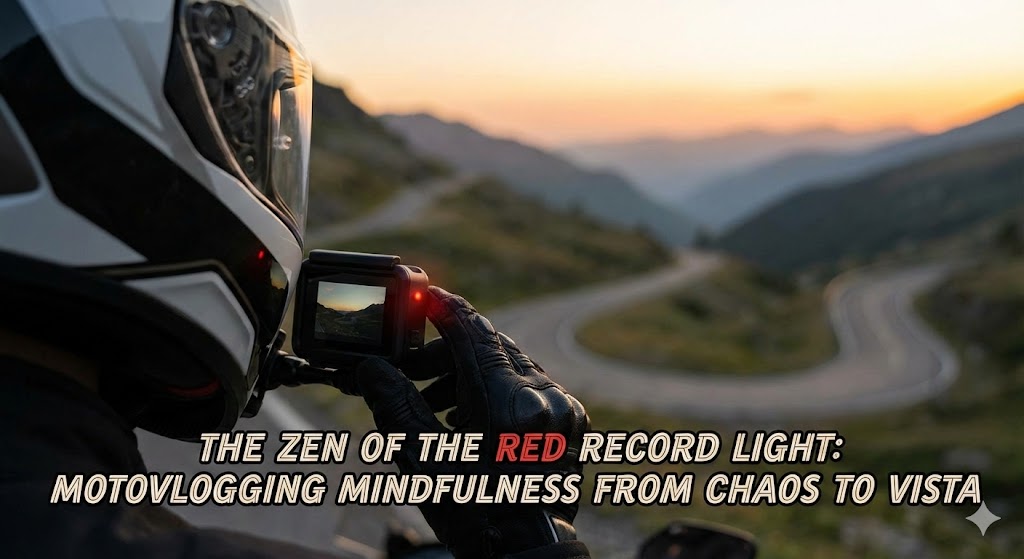
The Zen of the Red Record Light: Motovlogging Mindfulness from Chaos to Vista
The engine idles beneath you—a caged animal of heat and vibration waiting for the light to turn green. Surrounding you is a symphony of urban stress: horns blaring, exhaust fumes rising, commuters radiating impatience in their steel boxes.
Usually, this is where the anxiety sets in. The urge to escape.
But then you click a button on your helmet. A tiny red light reflects in your visor. “Recording.”
Suddenly, the noise shifts. You aren’t just a rider stuck in traffic anymore; you are the narrator of an experience. This isn’t just a commute to the twisties; it is the opening scene of a story.
Welcome to the unexplored intersection of technology and presence. Welcome to motovlogging mindfulness.
While many view motovlogging setups as a distraction, I argue the opposite. When used intentionally, the camera doesn’t pull you out of the ride; it forces you deeper into it. It transforms a standard motorcycle road trip into an exercise in acute awareness, balancing the grit of traffic with the serenity of stunning landscapes.
Here is how to turn your lens into a tool for motorcycle meditation.
The Paradox of the Helmet: Isolation vs. Connection
The Paradox of the Helmet: Isolation vs. Connection
Every rider knows the feeling of the helmet slipping on. The world muffles. You are instantly isolated in your own headspace. This isolation can lead to racing thoughts—the “monkey mind” chattering away about bills, emails, or the car that just cut you off.
When you motovlog, you introduce a silent partner. The camera is an unblinking eye that demands authenticity. You can’t fake the ride for the lens.
The Camera as the “Third Eye”
In meditative traditions, the “third eye” is associated with clarity and higher consciousness. In motovlogging mindfulness, your action camera serves this function physically.
Knowing the camera is rolling forces a state of “hyper-presence.” You become painfully aware of your inputs—how smoothly you roll off the throttle, your lane position, your scan rate. You aren’t just riding; you are observing yourself riding. This split consciousness—the doer and the watcher—is the very essence of mindfulness practice.
Phase 1: Traffic as Active Meditation
H2: Phase 1: Traffic as Active Meditation
Most riders endure traffic to get to the “good stuff.” A mindful motovlogger uses traffic as the dojo.
When surrounded by gridlock, the instinct is frustration. But the camera demands a narrative. If you are speaking into the microphone, raging at a minivan isn’t exactly compelling content (usually).
Instead, use the chaos to practice “filtering.” Just as you filter between lanes (legally, of course), practice filtering your reactions.
- The Practice: When a car merges aggressively without signaling, notice the spike of adrenaline in your chest. Acknowledge it for the microphone—not with anger, but with observation: “Okay, that driver is distracted. My heart rate just jumped. Deep breath. Re-adjusting space cushion.”
- The Result: By vocalizing the threat and your reaction for the vlog, you neutralize the emotion. You transform a “near miss” into a teachable moment for your future audience, and in doing so, you remain calm. The red record light becomes an accountability partner for your own serenity.
Phase 2: The Release and the Landscape
H2: Phase 2: The Release and the Landscape
The city sprawl finally breaks. The concrete tunnels give way to an expanse of green, blue, and gold. The horizon cracks open, revealing jagged peaks or endless desert.
This is the payoff. The moment the chest un-tightens.
In standard riding, it’s easy to blow past stunning landscapes at 70 mph, taking them for granted because the adrenaline is still pumping from the city.
Filming scenic rides requires you to slow down—mentally and often physically. You have to consider the shot. Where is the sun? How does the scale of that mountain look against the cockpit of the bike?
By looking for the beauty to capture it for others, you force yourself to truly see it. The act of framing a shot in your mind’s eye deepens your appreciation for the environment. You are no longer just passing through the landscape; you are collaborating with it to create art.
The awe you feel isn’t diminished by the camera; it is amplified because you are actively trying to bottle that lightning.
Practical Tips for Mindful Motovlogging
H2: Practical Tips for Mindful Motovlogging
If you want to try road trip serenity through a lens, you need to set boundaries so the tech doesn’t become the master.
1. The “Set and Forget” Rule
Your safety is paramount. Fiddling with settings while moving is the opposite of mindfulness; it’s dangerous distraction. Dial in your settings, check your angles before kickstand up, and hit record. If the shot isn’t perfect, let it go. That acceptance is part of the practice.
2. The narrated Silence
You don’t need to fill every second of your motovlog with chatter. Some of the most powerful moments in motorcycle road trip videos are pure engine noise and wind rushing past incredible scenery. Allow yourself periods of silence where you just soak in the visuals, knowing the camera is doing the work of remembering it for you.
3. Review as Reflection
The final stage of motovlogging mindfulness happens off the bike. When you edit your footage, you are reliving the ride. You might notice things you missed in the moment—a hawk circling overhead, or how tense your shoulders looked in city traffic. Editing becomes a post-ride meditation, a way to process the journey and integrate the lessons learned on the road.
Conclusion: The Ride is the Destination
Conclusion: The Real Ride
In the end, the “Nakli Life” is about pretending to be something we are not. But motovlogging mindfulness is the opposite. It is about using technology to be more present than ever before.
So, the next time you mount your camera, remember: You aren’t just capturing footage for YouTube. You are capturing presence. You are turning the ride into a ritual.
Ride safe, stay real.
Enjoyed this read? Check out our Motorcycle Diary section for more stories from the road, or visit our Gadget Reviews to see the gear that powers our journeys.